
Rimmel (post 1940)
Continued from: Rimmel
In 1943, three years after Rimmel went into receivership, Rimmel (Holdings), Ltd. (capital £5,000), and Rimmel (Distributors), Ltd (capital £5,000) were founded and acquired Rimmel’s British assets. Both companies were based at 14 Suffolk Street, Pall Mall. A new factory was opened at 30 Bollo Bridge Road, Acton, London in 1946, as the Hackney factory had been bombed during the war. It was subsequently moved to 28 Bikbeck Road, Acton in 1950. Rimmel Proprietaries, Ltd. (capital £100) was also founded in 1943 at 123 Wardour Street, London but I have been unable to find any connection with it and the other two companies.
Products
The British factory continued to manufacture a wide range of cosmetics including perfumes, lipsticks, face powder, mascaras, soaps and various creams. Most of the production was still labour intensive. Lipsticks, for example, were still made by hand pouring the molten mixture into moulds. Blending the oils that went into Rimmel fragrances continued to be carried out in Grasse, France.
In 1946, with the war over, Rimmel (Distributors) began advertising Rimmel products once more, most notable Rimmel Beauty Cake in seven shades and Rimmel Eye Cosmetique in three shades. The following year Rimmel added Lip Brush Rouge in seven unknown shades.
Beauty Cake and the Lip Brush Rouge were new lines. Beauty Cake was a powder cream rather than a pancake. It was similar to other oil-based compact powders introduced after the war but included turtle oil in the base. It was advertised as a two-in-one product because it supposedly protected the skin as well as beautifying it. Rimmel did something similar with its two-in-one cleansing and nourishing cream.
The Lip Brush Rouge was more innovative. Packaged in a rectangular plastic case with a mirror and chisel ended brush, it claimed that it could produce a clearer lip outline than ordinary lipstick. Brushes had been used to apply lipstick in film studios for years before the war but the idea was new to most consumers and does not appear to have been popular. Even today, lipstick brushes do not have many non-professional adherents.
Beauty Cake: “Through the expert blending of luscious cream and delicate powder, it is specially designed for preserving, the softness and elasticity of the skin.” Shades: Peach Glow, Pink Blossum, Desert Peach, Pink Orchid, Cream Rose, Hawaiian Tan, and Sable Tan.
Eye Cosmetique: “[F]or silky brows, lustrous lashes. Never runs or smears and stays on for as long as you wish. Strengthens the lashes too!” Shades: Black, Blue, and Brown.
Lip Brush Rouge: “Will produce lovely clear cut lines, no fading or blurring but smoothly finished spread of vibrant colour that lasts longer.” Seven shades.
In 1948, Rimmel introduced its Lip Fashion Pencil, a long lipstick packed in a slim, gold-tone case in ten shades. A number of these long ‘pencil’ lipsticks were introduced by cosmetic companies in the late 1940s with Rimmel’s being a relatively early version.
Lip Fashion Pencil: “Gloriously easy to apply—you draw your lips just like an artist does” Shades: Gay Red, True Red, Outlaw, Dangerous Red, Blue Purple, Notorious, Pink Purple, Pink Orchid, Pink Ice, and Glory.
In 1949, Rimmel quickly added a double-ended version of the Lip Fashion Pencil containing one shade for night and another for the day. In 1950, Rimmel then added double packs of Night and Day Perfumes and Night and Day Face Powders to create a limited Night and Day series.
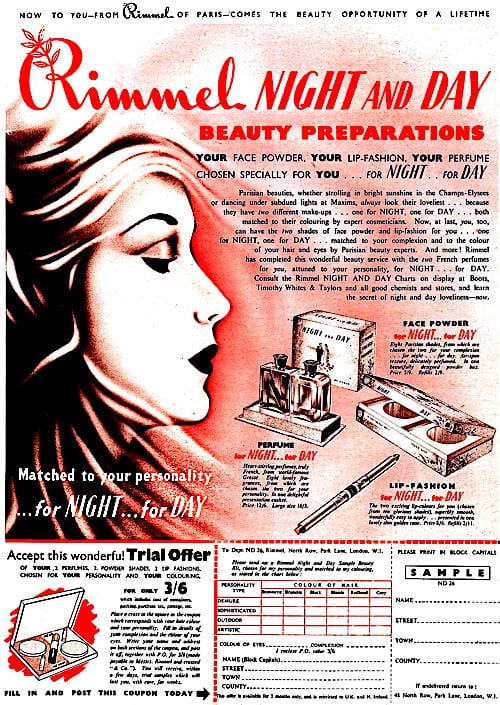
Above: 1950 Rimmel Night and Day Beauty Preparations.
These Night and Day preparations were selected according to the woman’s hair and eye colour.
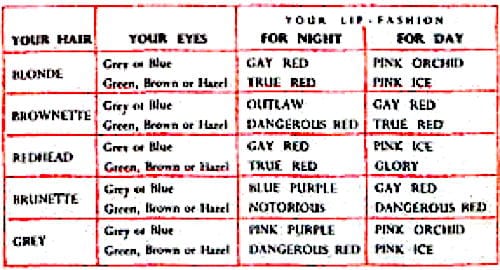
Above: 1950 Colour coordination chart for Night and Day Lip Fashion Lipsticks.
Rimmel brought back its Violet Oatmeal Soap in 1949 which joined Violet Oatmeal for the Bath, and Violet Oatmeal for Toilet Purposes. In 1950, Rimmel then expanded the series by adding Violet Oatmeal Face Pack. This would become the Violet Oatmeal Beauty Mask in 1953.
Violet Oatmeal Face Pack: “[R]eaches deep into the pores, searching out and removing those tiny particles of dust and powder which dull and blemish your beauty.”
Caplin
Despite their best efforts, the new owners of Rimmel did not manage to reverse the company’s fortunes and the business continued to operate at a loss. In 1950, they informed Robert Caplin [1907-1992] that they could not be able to pay the debt they had run up with his advertising agency, R. S. Caplin (Advertising) Ltd. Rimmel should have gone into administration but Caplin was persuaded to buy Rimmel instead. After the change in ownership in 1951, Robert Caplin brought his sister, Rose Glazer into the business. She would prove to be critical to its subsequent development.
The Caplins had little or no experience in the cometic industry and initially tried to maintain Rimmel&rquo;s standing as a middle-to-upmarket brand. In 1952, they opened a Rimmel salon at a fashionable London address – 70 Park Lane, London – and began repackaging Rimmel products in elegant upmarket designs. This began with a new waterproof, non-smudging cake mascara, later referred to as French Mascara.
In 1953, Rimmel introduced Nail Beauty Cabinet, a kit that combined most of the essentials for nail care into a single pack and repackaged its Violet Oatmeal series in more luxurious looking containers.
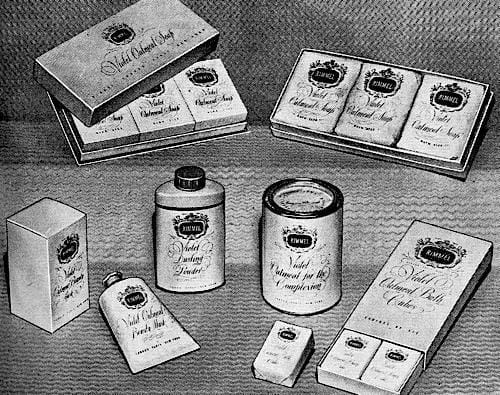
Above: 1953 Rimmel Violet Oatmeal Series. Top: Violet Oatmeal Soap. Bottom: Violet Oatmeal Beauty Mask, Violet Oatmeal Dusting Powder, Violet Oatmeal for the Complexion. and Violet Oatmeal Bath Cubes.
The product refurbishment culminated in the launch of Rimmel’s New Beauty Series in 1954. Products in the range included Rimmel Lipsticks, Lip Fashion Pencils, Liquid Complexions, Cream Rouges, Face Powders, Dusting Powders, Toning and Astringent Lotions, Complexion Milk, Hand-Beauty Milk, and Cleansing Cream.
Despite their best efforts the Caplins also failed to make Rimmel profitable as an upmarket line. Fortunately, they had more success after they reoriented it downmarket as a mass-market brand. Chemist & Druggist suggests that this change began in 1953 when Rose Glazer needed something to display at the Lewis’s Beauty Fair held in Manchester.
Mrs Glazer in last minute desperation, hit on an idea that laid the foundations of the present Rimmel-small packs ticketed at the famous 1s. 3d. and displayed on a tray. Within ten days, packs of six basic products were ready— lipstick, liquid make-up, powder, eye shadow cream, eye shadow stick and eye beauty pencil.
Supplies calculated to last the whole week were taken to the fair. and were sold in the first day to such incredulity from all including the authorities at Lewis’s that the takings were counted three times before the total figure was accepted!
The production line then had to swing into emergency action and was just able to keep pace with demand, the contingent in Manchester taking delivery of a fresh consignment every day by passenger train.(‘From desperation came inspiration,’ 1972, p. 9)
This makes for a good story but it did not result in a sudden change in direction. The first self-service trays/dispensers of Rimmel products did not go on general sale until early in 1955 and only contained five ‘trial-size’ Rimmel products – lipsticks, face powders, colognes, perfumes, and eye beauty pencils. When self-service tray idea proved to be popular and, more importantly, profitable Rimmel gradually phased out the New Beauty Series repurposing many of its lines for what became the Beauty on a Budget Series. Products in the series had lower margins but this was more than offset by reductions in packaging costs and increased sales.
The Beauty on a Budget title was first used in 1956, the same year Rimmel, Ltd. (capital £100) was founded at 118 Park Lane, London. This new entity replaced Rimmel Distributers, which was, by then, no longer distributing Rimmel products in the United Kingdom, that role being given to Walter Crowe, Ltd. in 1951.
Beauty on a Budget
All the lines in the Beauty on a Budget Series were priced at 1s. 3d. during the 1950s apart from a temporary increase to 1s. 4d. in 1958. There were inevitable price rises in the 1960s and Rimmel eventually abandoned its single price strategy in 1963. However, the Beauty on a Budget range was well established by then.
Products
Most of the products in the Beauty on a Budget Series were smaller ‘trial-size’ versions of existing Rimmel products stripped of their elaborate packaging. When new products were added to the range, Rimmel developed new dispensing trays to accomodate them and these gradually increased in size with some later dispensers coming in multiple levels.
In January, 1958, the Rimmel Beauty on a Budget tray was made up of twelve cosmetics: Hand Beauty Cream: Two-in One Cream; Face Powder (Pink Hyacinth, Pink Peony, Moss Rose, New Rachel, Angelica, and Tiger Lily shades); Liquid Make-up (Peach Glow, Desert Peach, Pink Blossom, and Cream Rose shades); Lipstick (True Red, Mandarin Red, Gay Red, Dangerous Red, Pink Orchid, Talked About Pink, and Pink Ice shades); Cream Rouge (Natural Pink, Pink Orchid, Pink Ice, and True Red shades); Eye Beauty Pencil (Black, Dark Brown, Light Brown, Grey, Green, and Blue shades), French Formula Mascara (Light Brown, Dark Brown, Black, Blue, and Green shades); Perfume (Tonight or Never, Muget, Lilas, Talked About, Gardenia, and Vocalise fragrances); Eye Shadow (Blue/Green, Blue Green, and Grey shades); Liquid Cologne (Anglaise Royal, and Eau de Lavande fragrances); and Solid Cologne (Ice Muguet, Iced Gardenia, and Iced Lavender fragrances) with a Stick Deodorant added later in the year.
Fragrances were not good sellers and the perfumes and liquid colognes were dropped from the tray by 1959.
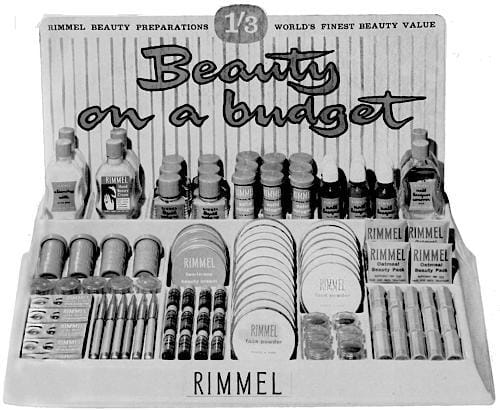
Above: 1959 Rimmel Beauty on a Budget counter dispenser.
New lines added to the Beauty in a Budget tray through 1959 included Beauty Milk; Nail Lacquer (Natural Pink, Talked About Pink, Pink Ice, Pink Orchid, True Red, and Colourless shades); Nail Lacquer Remover; Compressed Powder (Cream Rose, Peach Glow, Pink Blossom, and Desert Glow shades); and Oatmeal Beauty Pack; Eyeshadow Sticks (Clear Turquoise, Iridescent Blue, Lilac, Gold, Emerald, and Silver shades with White Colour blender used to modify the shade); Frosted Eye Shadow Stick (Frosted Green, Frosted Blue, Frosted Violet, and Frosted Silver shades); with the Plush Pink shade added to Rimmel Lipstick.
In 1960, Rimmel added: Orange Ice, Coffee Ice, and Violet Orchid Lipsticks in a new container with a gold top and blue plastic base; Gold Eye Shadow Stick; and Orange Ice, and Gold Dust Nail Lacquers. These were followed with: Liquid Line Brush; Liquid Eye Liner (Brown, Black, Grey, Green, and Blue shades); Coffee Ice, Lilac Ice, and Clear Pearl shades of Nail Lacquer, and the Lotus Blossom shade of Liquid Make-up in 1961.
Men’s range
In 1960, Rimmel branched out in a new direction debuting the H. E. range of toiletries for men – H. E. supposedly standing for ‘His Excellency’. These were not the first products made by Rimmel for men. Eugène Rimmel made and sold a range of soap, shaving and other grooming products for men in the nineteenth century.
The H. E. range contained the usual men’s toiletries in circulation in the 1960s – Pre-Electric Shave Lotion; Aerated Shaving Lather; After-Shave Lotion; Anti-Dandruff Shampoo; Tonic Hair Dressing; Spray Deodorant; After-Bath Body Talcum; and After-Bath Body Rub – all presented in black plastic, self-serve dispenser tray.
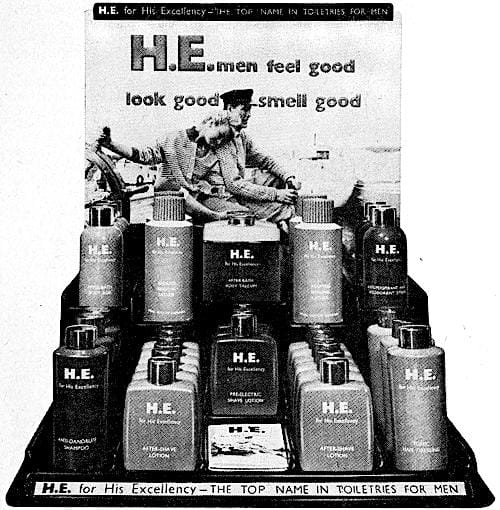
Above: 1960 Display stand for H.E. toiletries for Men. Rimmel would later repackage the entire line in black.
Sanitas Trust
Rimmel’s success brought it to the attention of Charles F. Sweeny [1909-1993] of the Sanitas Trust. Sanitas bought Rimmel in 1961 for £550,000 payable with £200,000 cash and 350,000 in ordinary Sanitas shares. Sweeny became the new chairman of Rimmel but Robert Caplin continued on as deputy chairman and Rose Glaser remained as the company’s managing director. She stayed with Rimmel until 1983 but after retiring went to work for Revlon where she helped the company relaunch the Charlie colour cosmetics as a mass-market brand. This included the design of a dispenser tray along the lines of those she had developed for Rimmel.
Black Opal
One of the last developments at Rimmel, before it was sold to the Sanitas Trust, was the creation of the more upmarket Black Opal range. This may have been developed to improve Rimmel’s margins. It first went on display at the Lewis’s Beauty Fair in 1961 before undergoing a general release in 1962. Many of the products in the Black Opal range were also available in the Beauty on a Budget series but the Black Opal sizes were larger and the cosmetics were housed in more luxurious packaging. Like the Beauty on a Budget and the H. E. men’s ranges it was also retailed in a dispensing tray. It does not appear to have been successful and it was later discontinued in preference to offering the Beauty on a Budget products in a range of prices.
Skin-care products included in the Black Opal range were Cold Cream, Skin Food with Vitamins, Moisturising Film, Cleansing Milk, and Toning Lotion. Most of these were already in, or later became available in, the Beauty on a Budget range.
Black Opal Cold Cream: “A finely emulsified cleaner suitable for all types of skin. Cleans away stale makeup, leaving skis soft and clean.”
Black Opal Skin Food with Vitamins: “Containing vial oils and reinforced with vitamins to counter act sallowness and encourage skin health. Nourishes as it protects.”
Black Opal Cleansing Milk: “A rich liquid for cleansing every type of skin. floats away stale make-up and dust leving the skin clean and smooth.”
Black Opal Toning Lotion: “for use after cleansing. Refreshes and refines the skin. Suitable for every type of complexion.”
Black Opal Moisturising Film: “Formulated especially to correct dry skin. Restores and maintains vital skin moisture.”
There was almost no difference between Black Opal and Beauty on a Budget make-up with lipsticks, rouges, powders, and nail lacquers coming in identical shades in both ranges. The only difference was that Black Opal substituted the Beauty on a Budget cake mascara with the Black Opal Mascarola roll-on mascara. This was an automatic/wand mascara applied with a grooved metal wand similar to the one used in Helena Rubinstein’s Mascara-matic (1957). It would be a couple of years before a similar product appeared in the Beauty on a Budget range.
Mascarola: “This roll-on mascara is colour-fast, waterproof and simple to apply. It separates your lashes and encourages them to curl.” Shades: Black, Dark Brown, Blue, Light Brown, and Charcoal Grey.
See also: Automatic Mascara
Later developments
In 1962, Rimmel, Ltd. acquired Rimmel’s French business which Chemist & Druggist claims was the original parent company. This does not sound right to me but as I have no records of the commercial relationships between Rimmel’s English and French businesses or when the ownerships were separated, the mystery remains unsolved. The French and British businesses were subsumed into Rimmel International when it was founded in 1968. This new company bought Jane Seymour in 1969.
See also: Jane Seymour
In 1972, Rimmel International was sold to the International Telephone and Telegraph Corporation (ITT), then subsequently sold to Schering-Plough (1980), and Unilever (1989), before being acquired by Coty in 1996, its current owner.
Timeline
| 1943 | Rimmel Holdings, and Rimmel Distributors founded. |
| 1946 | New factory opened in Acton. New Products: Beauty Cake. |
| 1947 | New Products: Lip Brush Rouge. |
| 1948 | New Products: Lip Fashion Pencil. |
| 1949 | New Products: Double-ended Lip Fashion Pencil. |
| 1950 | Factory moved to 28 Bikbeck Road, Acton. New Products: Violet Oatmeal Face Pack. |
| 1951 | Caplin family acquires Rimmel. Walter Crowe, Ltd. appointed as British distributors. |
| 1952 | Salon opened at 70 Park Lane, London. |
| 1953 | New Products: Nail Beauty Cabinet. |
| 1956 | Rimmel Ltd. founded. Rimmel headquarters moves to 156 New Bond Street. |
| 1959 | New Products: Beauty Milk; Nail Lacquers; and Eyeshadow Sticks. |
| 1960 | Rimmel moves to 62 Baker Street, London. New Products: H.E. range for men. |
| 1961 | Sanitas Trust buys Rimmel. New Products: Liquid Line Brush; and Liquid Eye Liner. |
| 1962 | New Products: Black Opal range. |
| 1964 | Rimmel moves to 140 Tottenham Court Road. |
| 1968 | Rimmel International founded. |
| 1972 | Rimmel International sold to International Telephone and Telegraph Corporation (ITT). |
| 1980 | ITT sells Rimmel International to Schering-Plough. |
| 1989 | Rimmel International sold to Unilever. |
| 1996 | Unilever sells Rimmel International to Coty. |
First Posted: 29th August 2025
Last Update: 10th November 2025
Sources
The chemist and druggist. (1859-). London: Morgan Brothers.
From desperation came inspiration, (1972). Supplement to Chemist and Druggist. September 2, 9.
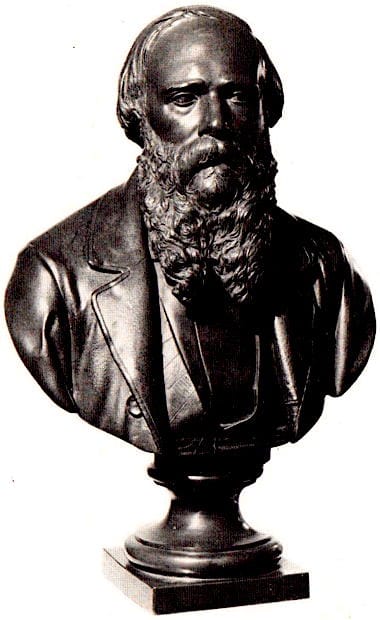
Bust of Eugène Rimmel. Originally housed in the French Hospital in London, which Rimmel helped to found, it was removed when the French Hospital became the Shaftesbury Hospital in 1967. Sold to a local junk dealer who coated it in gold paint, it cost Rimmel more to remove the gold paint than what they paid for the bust.
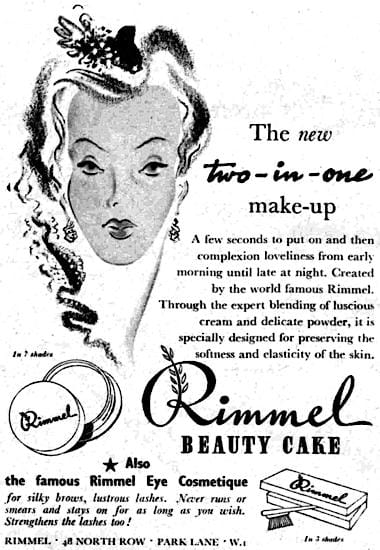
1947 Rimmel Beauty Cake and Eye Cosmetique.
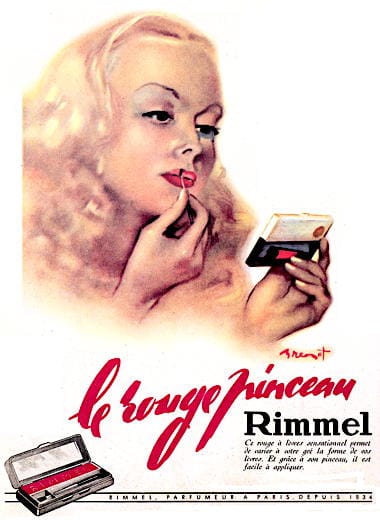
1947 Rimmel Rouge Pinceau (France).
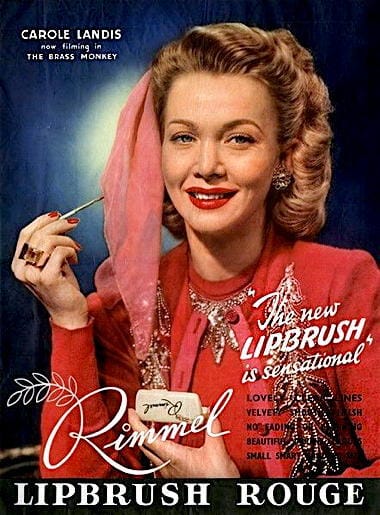
1948 Rimmel Lipbrush Rouge.
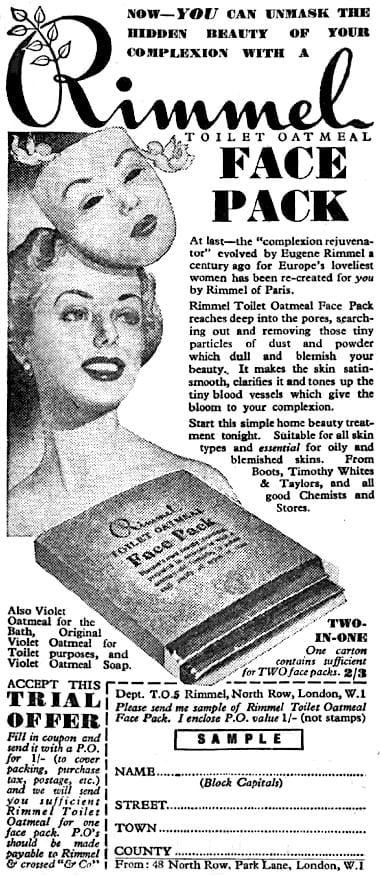
1950 Rimmel Face Pack.
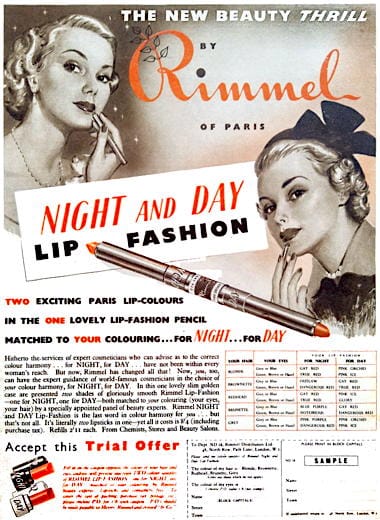
1950 Rimmel Night and Day Lip Fashion.
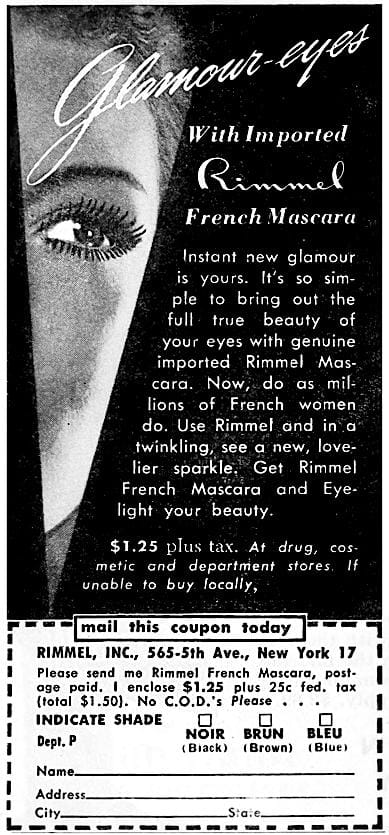
1950 Rimmel French Mascara (USA).
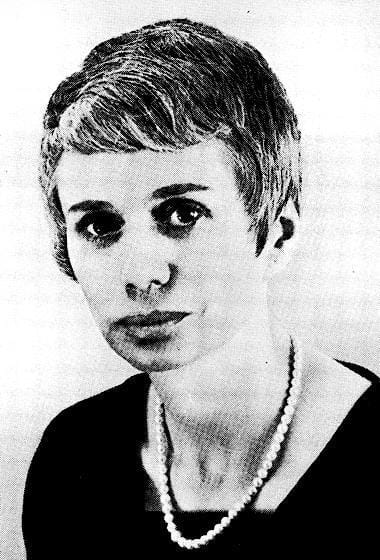
Evelyn Rose Glazer (née Caplin) [1924-2022].
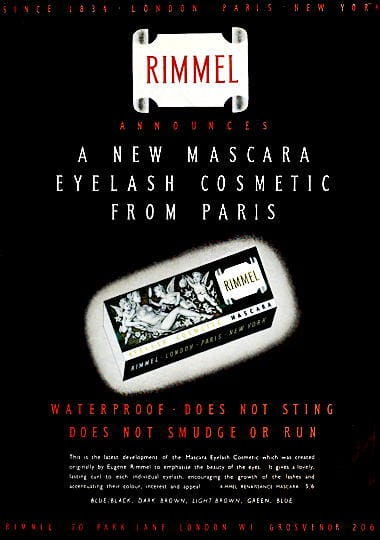
1953 Rimmel French Mascara.
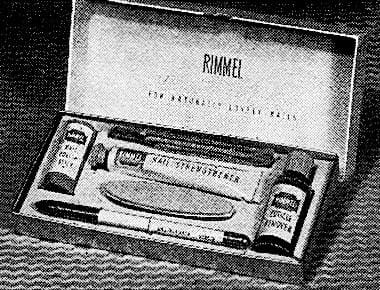
1953 Rimmel Nail Kit.
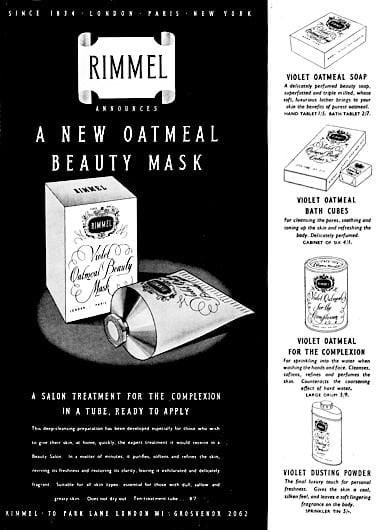
1953 Rimmel Violet Oatmeal range.
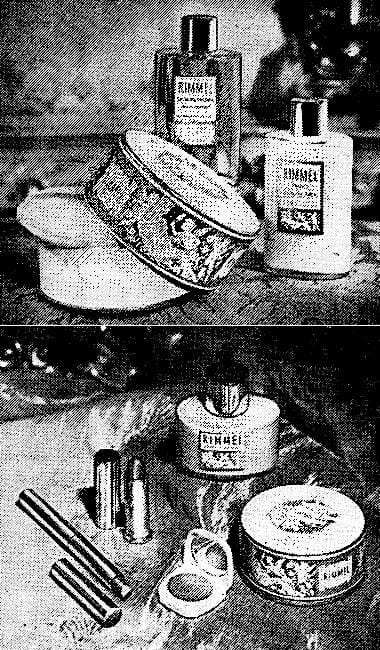
1954 Rimmel New Beauty Series.
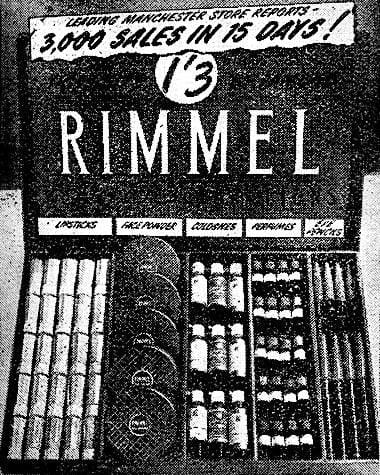
1955 Early Rimmel self-service dispenser. All of the products – lipsticks, compacts, colognes, perfumes and eye pencils – are the same price.
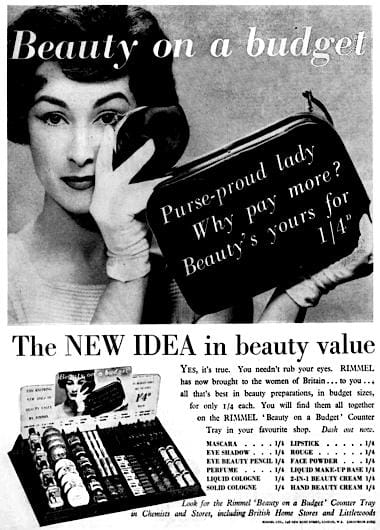
1957 Rimmel Beauty on a Budget.
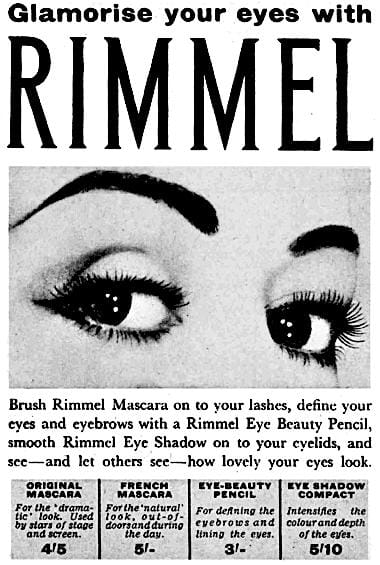
1956 Rimmel eye make-up from New Beauty.
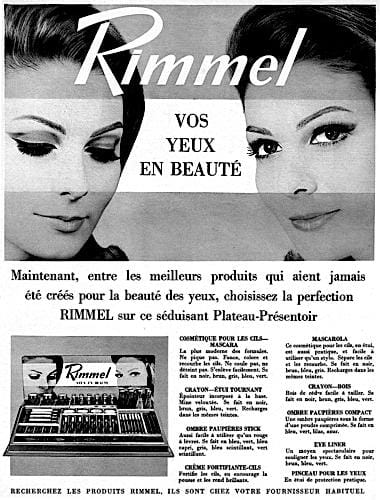
1963 Rimmel (France).
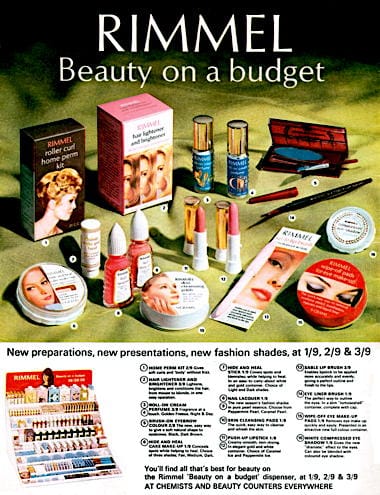
1966 Rimmel Beauty on a Budget in a range of prices.
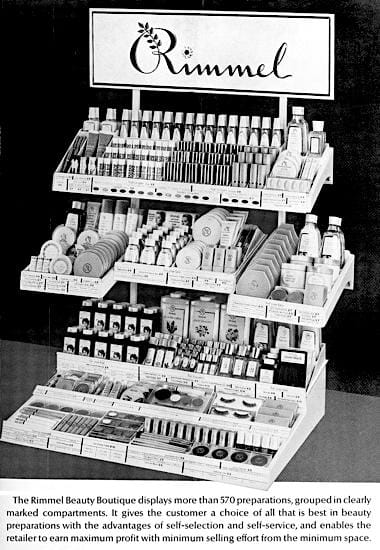
1969 Part of a Rimmel trade advertisment showing their latest display case.